I vibe coded SaaS for traders, made profits, then quit
some games are not worth playing
July ‘25, I met my friend for coffee. He’s a software engineer. Me too, but at that point I’d already pivoted into a whole different niche for about a year, so I wasn’t really coding at the time.
I was trading markets. Mostly forex. I had a private Discord community and a niche YouTube channel.
The idea to build a trading journal had been sitting with me for a while already. It’s a simple product, but who said you should build something complex to make money?
My friend was working full-time and looking for a side project, so I asked him to work on this idea with me.
We have skills. I have an audience to sell to. So why not try?
That’s how it all started.
After two months of work, the product was still raw — not ready to launch.
He implemented complex infrastructure to parse data from MetaTrader 5 — a tricky technical task. But that alone wasn’t enough. Our product was missing simple things like a sign-up flow, onboarding, payments, etc.
We were progressing really slowly, and at some point we just agreed to stop.
That was a “low ROI, high effort” project. Let’s move on.
October ‘25. I hadn’t coded for a year or so and was focused primarily on trading. So I felt the urge to come back to my craft, especially with the new developments in AI.
I was always an AI maximalist and I knew it would automate coding at some point in the future. In 2023, I published a video on my YouTube channel where I basically predicted everything we see in 2026.
And despite the fact that I could foresee these advancements in AI, I was still surprised the moment I downloaded Cursor and started playing with agents to build stuff.
I got hooked quickly. So I decided to build that trading journal myself, using AI agents.
The problem with our first iteration was speed. If you spend two months building software and it still has no sign-up flow, onboarding, or billing, it’s hard for me to imagine how you’ll make money with it.
And one of the main reasons: my friend refused to use tools like Claude Code or Cursor. He was sceptical and had a bunch of reasons not to use them.
For me it’s the opposite. The moment I started playing with AI agents I got excited about the opportunities it brings.
I could build a prototype that looked really good in a single evening.
I got obsessed, and for a week, everything I did was building this product.
Working with AI coding tools for the first time felt like I was that guy from the “Limitless” movie who took NZT-48.

I was always mostly a backend guy (Golang/Python) who didn’t really bother with all that React stuff on the frontend. I could fix some simple bugs or implement some new small feature. But to build an app from scratch would cost me so much time… before AI.
So I built it, blasting coffee and white monsters, vibing till 2 or 3am, just to wake up a couple hours later to continue.
You know, that was that kind of obsession, when you get so energized you wake up at 6am without an alarm just to start working.
Like a maniac.
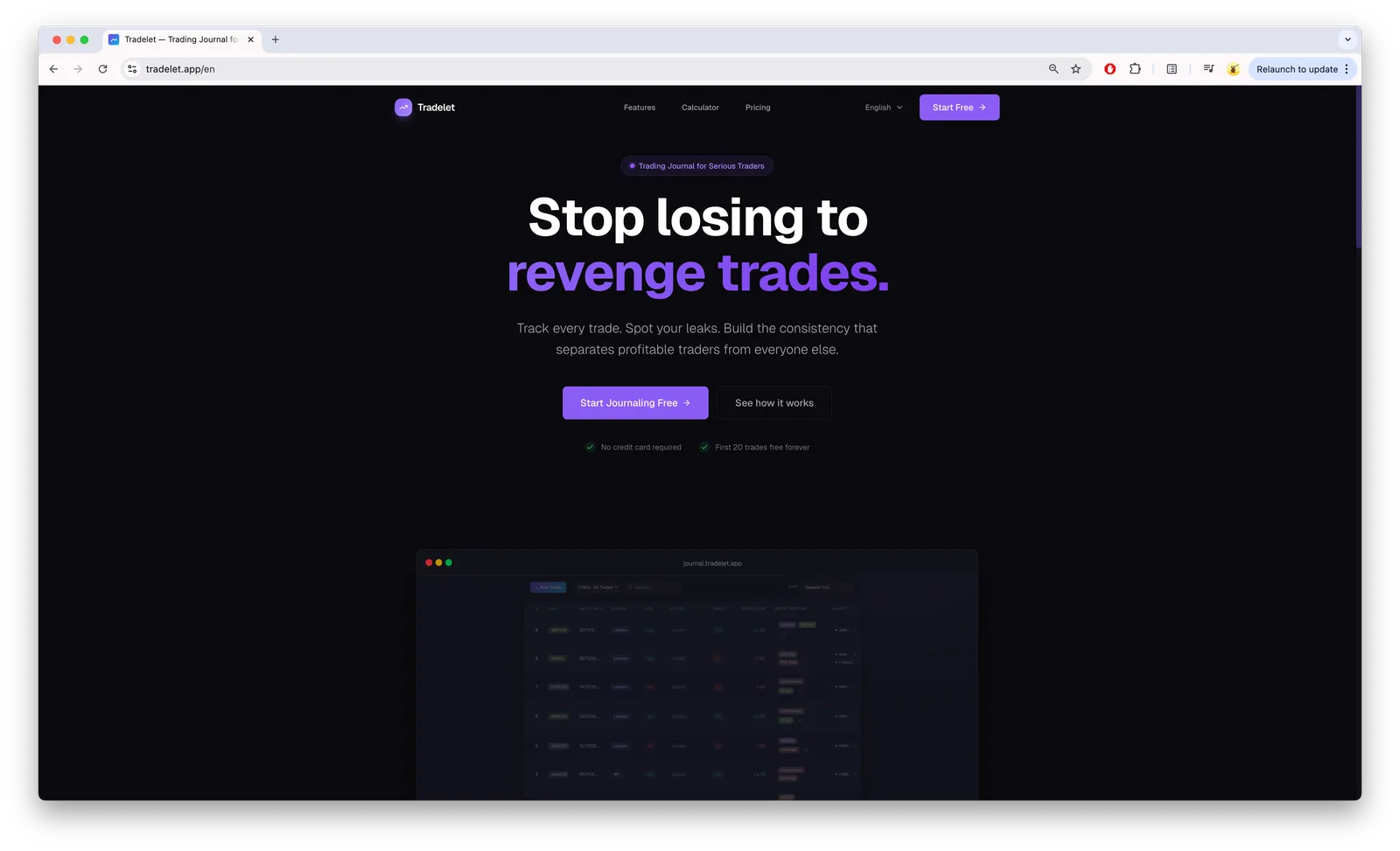
In one week, I launched. I already had an audience I could market to, so that was my main distribution channel.
Within 24 hours, I got my first paying customers.
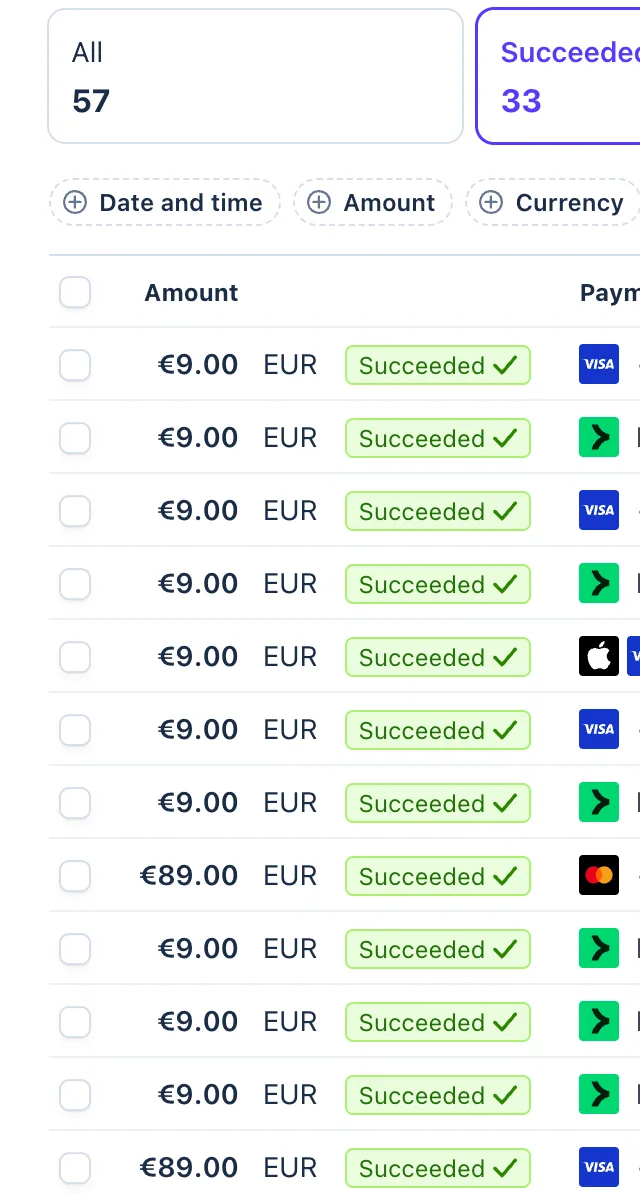
I’ve been coding since I was 10, and working in tech since 16. For a long time, I wanted to build my own product with real revenue. For the first time in my career, I was able to do that.
It felt amazing.
So why did I close it? That’s a good question to reflect on.
Let’s look at the math.
At the peak, I had 12 paying customers at €9/month. That’s €108 MRR.
Total sign-ups: 560. That’s a ~2% conversion rate from sign-up to paying.
Landing page visits in that time: ~4k. That’s a 15% conversion rate.
But also — this was a very warm audience who followed me and knew me. I had a 5k-subscriber niche YouTube channel and ~100 Discord members.
The first clients were happy with the product. I talked to everyone personally and collected feedback. Iterated on bugs and feature requests quickly. Stayed in touch with everyone.
So product itself was decent, especially for the price of two coffees a month.
But I understood: to make even €10k MRR with this product, I’d need 1,111 paying customers.
That’s 56,000 sign-ups.
373,000 landing page visits.
Okay, that’s some heavy work to do. I was limited to the RU market in terms of distribution. It would be quite hard to achieve those numbers. Scaling to the EN-speaking market is a whole different beast.
This is low-ticket B2C SaaS, so it takes A LOT of traffic to make it a financially reasonable project.
I had no outside capital and wasn’t willing to invest my own money in scaling distribution.
And what about churn?
It’s high. Really high.
Because the product itself was targeted at retail traders who churn from trading at a high rate.
They trade for a couple of months, then blow up their account and take a break — or quit completely.
They get emotional, start revenge trading, and then don’t even want to open a trade journal and log their data.
They are happy to pay for Discord servers or coaching, because it gives them hope.
A trading journal doesn’t give hope. It’s boring infrastructure for your operations. And it hurts when you’re in drawdown, because it shows you reality.
And reality is, almost all (retail) forex traders lose money in the end.
Here’s some data:
A landmark four-year study by the French financial regulator (AMF) tracking nearly 15,000 active retail forex and CFD traders found that 89% of accounts lost money, with an average loss of over €10,000 per client.
When looking at a 3-to-5 year horizon, the percentage of retail traders who remain net profit positive collapses to between 1% and 3%.
Survival rates are incredibly low. Research shows that nearly 40% of retail day traders quit within a single month. By the three-year mark, only 13% are still trading. By year five, only 7% remain.
That’s the same reason prop firms like FTMO or FundingPips are profitable and growing.
Most traders blow more challenges than they ever receive payouts.
That’s just the harsh truth of this industry.
After analysing this data and the industry stats, I came to the conclusion that it’s not a business I want to work on long term.
Low-ticket B2C SaaS with high churn is not the game I’d like to play.
So instead of trying to push it and grow, I decided to step back and pause.
I have skills and a proven case study. I know I can build.
So I decided to find a better thing to build. A better game to play.
To summarise:
- AI creates enormous opportunities for builders. Especially those who have prior experience with coding and software engineering.
- Building a product is easier now. But the same math of a profitable business still applies:
- LTV/CAC has to be positive
- Distribution channels have to be effective in terms of money spent and outcome received
That means you can build more. That leads you to test more hypotheses. The more hypotheses you test, the more chances you have to find something worth working on.
If I hadn’t built this SaaS, I wouldn’t have gotten real experience with B2C unit economics in a niche like trading.
Now I know better.